

The 1888 Diary

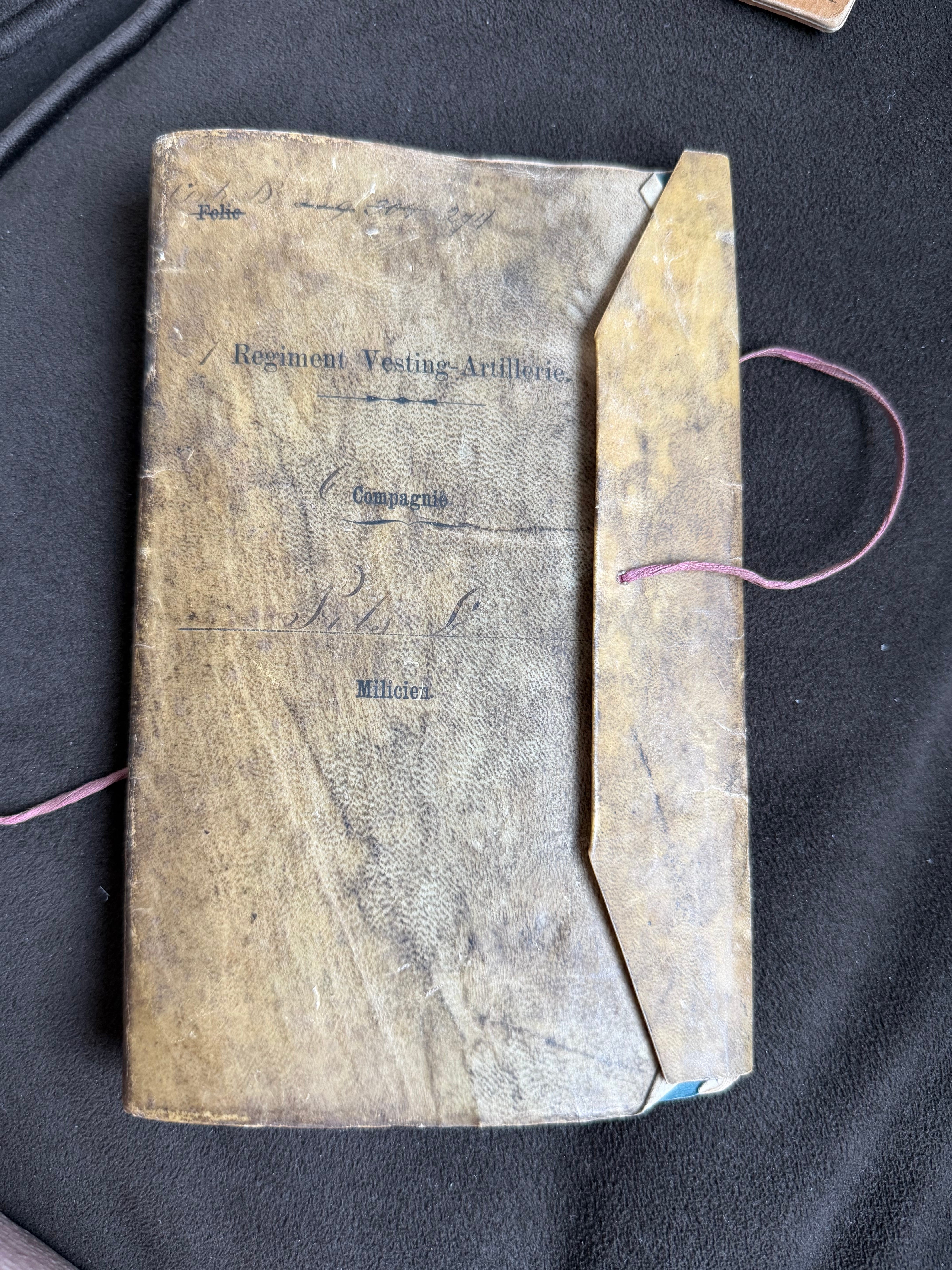
This Father’s Day, I find myself thinking not only about my father, but about the fathers I never knew.
I never met either of my grandfathers. Both died nearly twenty years before I was born. One died in 1949, the other in 1948. I have no memories of them, no recollection of their voices, no stories told firsthand around a dinner table.
And yet, lately, they have occupied my thoughts.
While researching my family’s history, I recently opened a box that had remained untouched for decades. Inside, I found a small leather-bound diary belonging to my maternal great-grandfather, Levie Pels.
The leather was worn smooth from age. The pages were fragile and yellowed. The handwriting was unfamiliar, written in careful ink script with a quill pen more than a century ago.
Yet as I held it in my hands, I realized I was touching something that he had once touched himself.
For a brief moment, the distance between 2026 and the nineteenth century seemed to disappear.
The diary was written entirely in Dutch. Armed with Google Translate, my phone camera, and a great deal of patience, I began trying to decipher its contents. Eventually, I sent photographs to my cousin, who has become my unofficial family translator.
His response surprised me.
What I had assumed was a diary was actually an official military document from the Kingdom of the Netherlands. Part military passport, part discharge certificate, and part certificate of good conduct, it documented my great-grandfather’s service in the 1st Regiment of Fortress Artillery.
The document described him in remarkable detail. He was born in Zutphen on May 7, 1869. He lived in Arnhem. He stood 1.67 meters tall. He had brown eyes, dark hair, an oval face, and no distinguishing marks. For the first time in my life, I knew what my great-grandfather looked like at age 20.
A man who died long before I was born suddenly became something more than a name on a family tree.
The document recorded that he was called up for military service in 1888 and that he later received a certificate stating he had conducted himself honorably during his service.
Tucked inside the leather folder were other surprises.
There were fire insurance policies.
Official government documents.
And perhaps my favorite discovery of all—a letter from his commanding officer regarding his request to marry.
Apparently, before Levie could receive permission to wed, he first had to settle an outstanding debt of 19.21 guilders. Since he had only paid 14.93 guilders, he still owed 4.28 guilders before permission would be granted.
Somehow, this small bureaucratic annoyance from 1890 made him feel wonderfully human.
For years, I had viewed my ancestors through the lens of history. They were survivors, immigrants, victims of persecution, and figures connected to major historical events.
But here was a young man simply trying to get married, only to be told he had to pay his bill first.
The farther back I go, the more I appreciate these ordinary details.
History often preserves the grand events while losing the everyday moments that make people real.
Yet the greatest discovery inside the box was not my great-grandfather’s military record.
It was a letter.
A final letter.
Written by my grandfather, Nathan Katz, to my mother.
The last note he ever wrote to her before taking his own life in 1949.
For years, I had studied Nathan through documents, photographs, court records, wartime correspondence, and family stories. I knew about the sacrifices he made to save his family. I knew about the pressures of rebuilding a business after the war. I knew about the accusations, disappointments, and burdens he carried.
But none of those records felt as personal as seeing his own handwriting on a letter addressed to his daughter.
In that moment, the distance of decades disappeared.
A man I had never met became not simply a historical figure or a grandfather whose story I had spent years researching.
He became a father, writing to his child.
As I sat surrounded by papers from different generations, I realized that this box contained a conversation across time.
My great-grandfather’s military papers.
My grandfather’s final letter.
Photographs of men whose faces I recognized but whose voices I never heard.
All of them fathers.
All of them gone.
And yet all of them are somehow still present.
This Father’s Day, I find myself wondering about these men.
What did they sound like?
What made them laugh?
What frightened them?
What dreams did they have for their children?
Do I have my great-grandfather’s persistence? My grandfather’s determination? My father’s resilience?
I will never know for certain.
What I do know is that each generation leaves something behind.
Sometimes it is a story.
Sometimes it is a photograph.
Sometimes it is a military certificate, a fire insurance policy, or a letter folded carefully into a box.
And sometimes those fragments are enough.
Enough to remind us that before they became our ancestors, they were simply people.
Young men with brown eyes and dark hair.
Fathers worried about their children.
Men who are trying to build lives, earn a living, fall in love, survive hardship, and find their place in the world.
This Father’s Day, I will think about my father.
But I will also think about the fathers I never knew.
The ones whose handwriting still survives long after their voices have disappeared.
Have you ever felt connected to someone you never had the chance to know? What helped you build that connection?